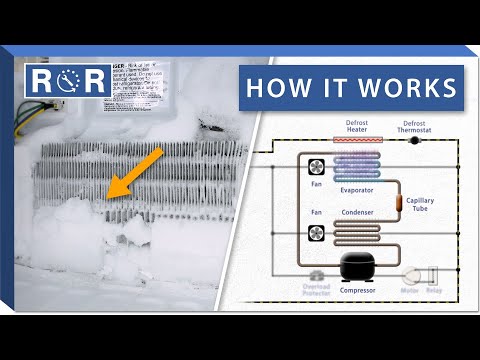
Refrigerator Defrost - How it Works
Refrigerator Defrost: Unraveling the Mystery of How Your Fridge Stays Frost-Free
Have you ever wondered how your refrigerator manages to keep your food perfectly chilled without turning into an arctic tundra inside? The secret lies in its sophisticated defrost system. While older models required manual defrosting, today's "frost-free" refrigerators handle this crucial task automatically, saving you time and preventing frustrating ice buildup. But how exactly does this ingenious system work? Let's dive in!
Why Defrosting is Essential for Your Refrigerator
Ice buildup inside your refrigerator or freezer isn't just an aesthetic problem; it significantly impacts performance and efficiency. A thick layer of frost on the evaporator coils acts as an insulator, making it harder for your fridge to cool effectively. This forces the compressor to work harder and longer, leading to higher energy bills, reduced appliance lifespan, and potentially warmer temperatures inside the compartments, risking food spoilage. A functioning defrost system is vital for maintaining optimal cooling, energy efficiency, and usable space.
The Key Components of an Automatic Defrost System
Modern frost-free refrigerators rely on a coordinated effort from several key components to keep ice at bay:
- Defrost Timer or Control Board: This is the brain of the operation. It's responsible for initiating and terminating the defrost cycle at regular intervals. In newer, more advanced refrigerators, a control board might use adaptive defrost technology, which learns usage patterns to optimize defrost times.
- Defrost Heater: The muscle of the system, this heating element is typically located near or directly on the evaporator coils. Its job is to generate heat to melt away any accumulated frost.
- Defrost Thermostat (or Bimetal Thermostat): A critical safety and efficiency component. This sensor detects the temperature around the evaporator coils. It ensures the heater only stays on long enough to melt the ice, preventing overheating and allowing the compressor to restart once the coils are clear.
- Drain Pan and Drain Tube: As the ice melts, the resulting water needs a place to go. It drips into a drain pan below the evaporator coils and then flows through a drain tube to an external pan, usually located near the compressor at the bottom of the fridge, where it evaporates.
- Evaporator Fan: While not directly part of the defrost cycle, the evaporator fan plays a crucial role in circulating cold air throughout the refrigerator and freezer compartments, ensuring even cooling and helping to prevent localized frost buildup.
For a fantastic visual breakdown of these components and how they fit together, we highly recommend checking out this helpful video: Refrigerator Defrost System - How It Works.
The Automatic Defrost Cycle: A Step-by-Step Breakdown
The defrost cycle is a precisely timed operation that typically occurs every 6 to 10 hours, lasting about 20 to 30 minutes:
- Normal Operation: Most of the time, your refrigerator operates normally, with the compressor running to cool the evaporator coils and the evaporator fan circulating cold air. During this phase, moisture in the air condenses and freezes onto the cold coils, forming a layer of frost.
- Initiating Defrost: The defrost timer or control board reaches its pre-programmed interval. It then signals the refrigerator to enter defrost mode.
- Heater Activation and Cooling Pause: The control board turns off the compressor and the evaporator fan. Simultaneously, it activates the defrost heater.
- Ice Melting: The defrost heater quickly warms up, melting the layer of frost from the evaporator coils. The melted water drips down into the drain pan.
- Thermostat Intervention: As the ice melts and the coil temperature rises, the defrost thermostat (bimetal switch) senses that the coils have reached a safe temperature (usually around 40-50°F). It then opens its circuit, cutting power to the defrost heater. This prevents the heater from running too long and potentially overheating the freezer compartment.
- Resuming Normal Operation: Once the heater is off, the defrost timer or control board allows a short cool-down period. After this, it reactivates the compressor and evaporator fan, returning the refrigerator to its normal cooling cycle. The melted water in the drain pan beneath the fridge slowly evaporates due to the heat from the compressor.
Common Defrost System Problems and What They Mean
When your refrigerator isn't defrosting properly, you'll likely notice excessive ice buildup in the freezer, a lack of cooling in the fresh food compartment, or even water leaking from the fridge. Common culprits include:
- Failed Defrost Heater: If the heater element burns out, ice will accumulate rapidly.
- Faulty Defrost Thermostat: If it fails to close, the heater won't turn on. If it fails to open, the heater could run too long, causing the freezer to warm up.
- Malfunctioning Defrost Timer or Control Board: The timer might get stuck in a cycle (either cooling or defrosting) or fail to initiate the defrost sequence at all.
- Clogged Drain Tube: Even if the defrost system works, a clogged drain tube (often with ice or food debris) will prevent melted water from escaping, leading to ice buildup at the bottom of the freezer or water leaking inside the fridge.
Keep Your Fridge Running Smoothly
Understanding how your refrigerator's defrost system works not only satisfies your curiosity but also empowers you to recognize potential problems early. While many defrost system repairs are best left to qualified appliance technicians, knowing the basics can help you troubleshoot and describe issues more accurately. Regular maintenance, like ensuring door seals are tight and keeping the drain tube clear, can also extend the life and efficiency of your frost-free refrigerator.