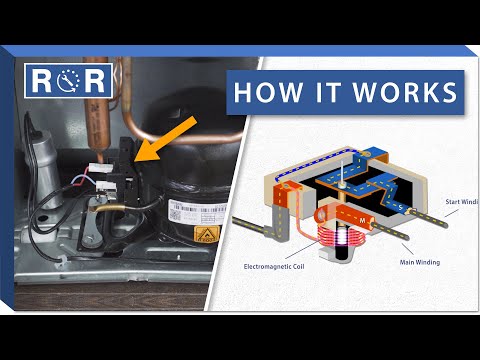
How a Current Start Relay Works (Refrigerator)
Understanding the Heartbeat: How a Refrigerator Current Start Relay Works
Few things are as essential to a modern home as a working refrigerator. When your fridge starts acting up – perhaps it's humming but not cooling, or worse, making a clicking sound and then falling silent – a tiny but mighty component called the "current start relay" might be the culprit. This unsung hero plays a critical role in getting your refrigerator's compressor, the very heart of its cooling system, up and running. But how exactly does it work?
What is a Current Start Relay?
At its core, a current start relay is an electrical switch designed specifically for refrigerator compressors. Its primary job is to provide a brief, powerful surge of electricity to the compressor's "start winding" during startup. Think of it like the starter motor in your car – it gives the engine the initial push it needs to get going, then disengages once the engine is running on its own.
Why Does a Compressor Need a "Boost?"
Refrigerator compressors are powerful electric motors, and like many motors, they require a significant amount of current to overcome inertia and begin spinning from a dead stop. This initial surge of power is needed for the "start winding," a special coil within the compressor motor that provides the extra torque for startup. Once the motor reaches a certain speed, it no longer needs the start winding and can run efficiently on its "run winding." The current start relay is the device that manages this delicate transition.
The Genius Behind the Current Start Relay's Operation
The magic of the current start relay lies in its clever use of electrical current to control the compressor's startup sequence. Here's a step-by-step breakdown of its operation:
When the refrigerator's thermostat signals the compressor to start:
- Initial Power On: Electricity is sent to the compressor. This current flows through a coil inside the current start relay.
- Magnetic Field Created: As current flows through the relay's coil, it generates a magnetic field.
- Contacts Close: This magnetic field is strong enough to pull an armature or plunger inside the relay, causing a set of electrical contacts to close.
- Start Winding Engaged: When these contacts close, they complete the circuit to the compressor's "start winding." This provides the necessary boost of power to get the compressor motor spinning.
- Compressor Starts Up: With the start winding engaged, the compressor rapidly begins to accelerate.
- Current Drops (Relay Disengages): As the compressor motor gains speed, the electrical current flowing through the main "run winding" (and consequently, through the relay's coil) naturally decreases. This drop in current weakens the magnetic field inside the relay.
- Contacts Open: With the magnetic field weakened, the armature or plunger drops back, opening the contacts. This disconnects power to the "start winding."
- Running on Run Winding: The compressor continues to operate efficiently on its "run winding" alone, now that it has successfully started.
This entire process happens in a matter of seconds, ensuring a smooth and efficient startup for your refrigerator's compressor. For a great visual explanation of this process, check out this helpful video: How a Refrigerator Start Relay Works.
Signs of a Failing Current Start Relay
Because the current start relay is so integral to the compressor's operation, a faulty one can lead to clear symptoms:
- Refrigerator Not Starting: The most obvious sign. If the compressor isn't getting its initial boost, it won't be able to start at all.
- Clicking Sound, Then Silence: You might hear a "click" (often the overload protector tripping due to the compressor trying and failing to start) followed by silence. The fridge might attempt this cycle every few minutes.
- Fridge Humming, But Not Cooling: The compressor might be trying to run, but if the start winding isn't disengaging properly, it can overheat or operate inefficiently, leading to poor cooling.
- Intermittent Operation: The fridge might work sometimes and not others, depending on how the relay's contacts are behaving.
Troubleshooting Your Current Start Relay
If you suspect your current start relay is failing, remember to always prioritize safety! Unplug your refrigerator before attempting any inspection. The relay is typically a small, often black, component attached directly to the side of the compressor. You might visually inspect it for burn marks or a melted appearance. Some older relays might even rattle if shaken, indicating loose internal components. However, for a definitive diagnosis, a multimeter test for continuity is often required.
While understanding how your refrigerator works can empower you, remember that appliance repair can be complex. If you're uncomfortable with electrical components or aren't sure how to proceed, it's always best to consult with a qualified appliance repair technician or find the correct replacement parts from a trusted supplier.
The current start relay may be small, but its role in keeping your food cold is monumental. Knowing how it functions can help you diagnose issues and keep your refrigerator running smoothly for years to come!