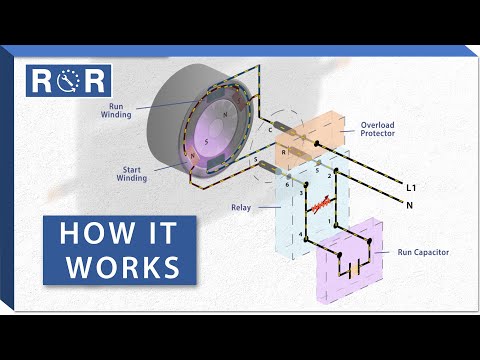
Refrigerator Compressor Starter - How it Works
The Silent Hero: Understanding Your Refrigerator's Compressor Starter
Your refrigerator is arguably the most vital appliance in your home, tirelessly working 24/7 to keep your food fresh and safe. But what happens when that reassuring hum stops, and your fridge starts to feel a little too warm? Often, the culprit lies with the compressor – the heart of your cooling system. And for the compressor to even begin its work, it needs a little help from a crucial, yet often overlooked, component: the compressor starter.
This tiny part plays a monumental role in getting your refrigerator's cooling cycle going. Without it, your compressor would remain dormant, and your perishables would quickly perish. Let's dive into how this clever device works to keep your fridge running smoothly.
What Exactly Does the Compressor Do?
Before we dissect the starter, it's essential to understand its main beneficiary: the compressor. Think of the compressor as a powerful pump. Its job is to pressurize and circulate refrigerant gas through the sealed system of your refrigerator. This process facilitates the absorption of heat from inside the fridge and its release outside, creating that cool, crisp environment you rely on.
The Challenge: Getting a Motor Started
Electric motors, especially those as powerful as a refrigerator compressor's, require a significant surge of electricity to overcome inertia and begin rotating. This initial burst of power is known as "inrush current." If a compressor motor were directly connected to the power supply without any assistance, this massive current draw could trip circuit breakers, damage the motor windings, or even cause power fluctuations in your home. This is where the compressor starter comes into play.
Introducing the Compressor Starter: Your Compressor's Kickstart
The compressor starter's primary function is to provide that necessary initial surge of power to the compressor's "start winding" for a fraction of a second. Once the compressor motor reaches operational speed, the starter disengages the start winding, allowing the motor to run efficiently on its "run winding." This clever mechanism ensures a smooth, safe, and energy-efficient start-up.
There are two main types of compressor starters commonly found in refrigerators: the Positive Temperature Coefficient (PTC) starter and the Current Relay starter. Often, they are accompanied by an overload protector, which acts as a safety switch.
How a PTC (Positive Temperature Coefficient) Starter Works
PTC starters are prevalent in many modern refrigerators due to their simplicity and reliability. They utilize a small, disc-shaped thermistor made of a ceramic material that has a unique property: its electrical resistance increases dramatically as its temperature rises.
- Starting Phase: When the compressor needs to start, the PTC thermistor is cool, offering very low electrical resistance. This allows a large current to flow through both the run winding and the start winding of the compressor motor, providing the necessary torque to get it spinning.
- Running Phase: As current flows through the PTC thermistor, it quickly heats up. As its temperature increases, its resistance skyrockets, effectively cutting off the current to the start winding. The compressor then continues to run solely on its run winding.
You can often identify a PTC starter by its small, usually black, puck-like shape that plugs directly onto the compressor terminals. For a visual understanding of how these compact starters look and function, take a moment to watch this helpful video on refrigerator compressor starters, which clearly demonstrates a PTC starter in action.
How a Current Relay Starter Works
Current relay starters are more commonly found in older or larger refrigeration units. These devices operate on an electromagnetic principle:
- Starting Phase: When the compressor attempts to start, a high surge of current flows through a coil within the relay. This current creates a magnetic field, which pulls a plunger upwards. This plunger then closes a set of contacts, connecting the start winding of the compressor to the power supply.
- Running Phase: As the compressor motor gains speed, the current draw through the run winding decreases. This reduction in current weakens the magnetic field in the relay's coil, causing the plunger to drop back down. The contacts open, disconnecting the start winding, and the compressor continues to run on its run winding.
The Overload Protector: A Crucial Safety Net
Often housed alongside or integrated with the compressor starter is the overload protector (also known as a thermal overload). This is a critical safety device designed to prevent the compressor from overheating and potentially burning out. It works by monitoring the current draw and/or temperature of the compressor.
If the compressor draws too much current (e.g., due to a faulty motor, low refrigerant, or an issue with the starter itself) or gets excessively hot, the overload protector will trip, temporarily cutting power to the compressor. This protects the motor from severe damage. Once the compressor cools down or the excessive current draw subsides, the overload protector will automatically reset, attempting to restart the compressor.
Signs of a Faulty Compressor Starter
A failing compressor starter can lead to several common refrigerator problems:
- Clicking Sound, No Start: You might hear a repetitive clicking sound (from the overload protector tripping and resetting) every few minutes, but the compressor never actually starts.
- Compressor Hums Briefly Then Shuts Off: The compressor tries to start, hums loudly for a few seconds, then shuts down. This is often the overload protector doing its job.
- Fridge Not Cooling: The most obvious symptom. If the compressor isn't running, your fridge won't cool.
- No Compressor Activity at All: Sometimes, a completely failed starter means the compressor won't even attempt to hum or click.
Troubleshooting and Replacement
If you suspect your compressor starter is faulty, always remember to unplug your refrigerator before attempting any inspection or repair. A visual inspection can sometimes reveal melted plastic or a burnt smell, indicating a failure. While testing with a multimeter can confirm a faulty starter (e.g., checking resistance on a PTC or continuity on a relay), replacing a compressor starter is often a straightforward DIY repair for those comfortable with basic appliance work.
However, it's crucial to correctly diagnose the problem, as similar symptoms can arise from a failing compressor itself or other issues. If you're unsure, it's always best to consult with a qualified appliance repair technician.
Understanding how your refrigerator's compressor starter works demystifies a critical part of your appliance's operation. It's a small component with a big job, ensuring your fridge can kick into action to keep your food perfectly chilled. If you're in need of a replacement, be sure to source genuine, high-quality appliance parts to ensure longevity and proper function for your refrigerator.