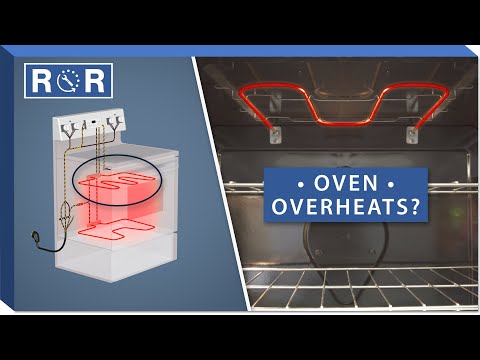
Oven Keeps Overheating - Troubleshooting
Is Your Oven Overheating? Here's Why & How to Fix It!
Few things are as frustrating as pulling a charred meal from an oven that was supposed to be baking at a precise temperature. An oven that keeps overheating isn't just a recipe for burnt dinners; it can also be a safety hazard and a sign of a deeper problem. If your oven is running too hot, reaching extreme temperatures, or simply not regulating heat properly, it's time to investigate. Don't worry, many common causes of oven overheating can be diagnosed and even fixed with a little DIY know-how.
Understanding Your Oven's Temperature Control
Before diving into fixes, it helps to understand how your oven maintains its temperature. Generally, an oven works by cycling its heating elements (or gas burner) on and off. This process is managed by a temperature sensor (often called a thermistor) inside the oven cavity, which sends readings to the main control board (or thermostat). The control board then decides when to activate or deactivate the heating elements to keep the temperature within the desired range. When this delicate balance is disrupted, your oven can start to overheat.
Common Reasons Your Oven Overheats (And How to Troubleshoot)
1. A Faulty Oven Temperature Sensor (Thermistor)
This is arguably the most common culprit for an oven running too hot. The temperature sensor is a small, rod-like probe usually located inside the oven cavity, often at the top back or side. If it's defective, it might send inaccurate, low-temperature readings to the control board, causing the board to continuously signal the heating elements to stay on, leading to overheating.
- Symptoms: Oven consistently cooks food too fast or burns it, oven temperature is much higher than the set temperature, error codes on the display.
- Troubleshooting: Visually inspect the sensor. Is it touching the oven wall? Is it bent or corroded? You can also test its resistance with a multimeter (refer to your appliance's service manual for expected resistance values at room temperature).
- Solution: If the sensor is faulty, it needs to be replaced. For a visual guide on locating and potentially testing your oven's temperature sensor, check out this helpful video: Oven Temperature Sensor Troubleshooting.
2. A Malfunctioning Oven Control Board (Thermostat)
The control board, sometimes referred to as the oven thermostat or ERC (Electronic Range Control), is the brain of your oven. It receives signals from the temperature sensor and sends power to the heating elements. If the control board is faulty, it might misinterpret sensor readings or fail to cut power to the heating elements when it should, resulting in an oven that won't stop heating.
- Symptoms: Erratic oven behavior, oven not responding to commands, oven getting too hot even if the temperature sensor is good, display issues.
- Troubleshooting: This is harder to diagnose without specialized tools. Often, if the temperature sensor tests good, the control board is the next suspect. Look for signs of burning or charring on the board itself (after safely accessing it).
- Solution: A defective control board usually requires replacement. This can be a more complex and costly repair.
3. Stuck Bake or Broil Element (Electric Ovens)
In electric ovens, the bake element (at the bottom) and broil element (at the top) cycle on and off to maintain temperature. If a relay on the control board or the element itself gets stuck in the "on" position, that element will continuously heat, causing the oven to overheat.
- Symptoms: One of the elements is glowing red constantly, even after the oven has reached (or exceeded) the set temperature.
- Troubleshooting: Carefully observe which element is staying on. If it's always on, even when it shouldn't be, it's either a faulty element or a problem with the relay on the control board that powers it.
- Solution: Replace the faulty element or address the control board issue.
4. Defective Igniter (Gas Ovens)
For gas ovens, the igniter is crucial for lighting the gas burner. A common issue leading to overheating is a "weak" igniter that doesn't get hot enough to ignite the gas quickly but stays on, allowing gas to flow continuously or intermittently, leading to an uncontrolled flame and excessive heat.
- Symptoms: Strong gas smell, oven heating up much higher than expected, yellow or orange flame instead of blue.
- Troubleshooting: Observe the igniter and burner when the oven is supposed to be heating. If the igniter stays glowing for an unusually long time before ignition, or if the flame appears uncontrolled, the igniter could be the problem.
- Solution: Replace the gas oven igniter.
5. Blocked Oven Vents
Ovens have vents, usually located around the back or top, to allow excess heat and moisture to escape. If these vents become blocked by foil, food debris, or even the oven's placement too close to a wall, heat can become trapped inside, causing the oven to overheat or cook unevenly.
- Symptoms: Oven gets excessively hot, uneven cooking, excessive heat radiating from the oven exterior.
- Troubleshooting: Visually inspect all around your oven, especially the top and back, for any obstructions. Ensure there's adequate clearance if your oven is built into cabinetry.
- Solution: Clear any blockages from the oven vents and ensure proper ventilation around the appliance.
Safety First: Before You Start Troubleshooting
Always prioritize safety when working with appliances. Before you begin any inspection or repair:
- Unplug the oven from its power source or turn off the circuit breaker.
- Allow the oven to cool completely to avoid burns.
- Wear appropriate safety gear, such as work gloves, to protect your hands from sharp edges.
- If you're dealing with a gas appliance, ensure proper ventilation and be aware of gas safety procedures.
When to Call a Professional Appliance Repair Technician
While many oven overheating issues can be tackled by a DIY enthusiast, there are times when it's best to call in the experts:
- If you're uncomfortable working with electrical components or gas lines.
- If diagnosing the problem becomes too complex or requires specialized tools.
- If the issue involves the main control board, which can be an expensive part and tricky to replace.
- If you have a gas oven and suspect a gas leak or burner issue – gas appliance repair should always be handled with extreme caution.
Don't Let Your Oven Run Wild!
An oven that keeps overheating is more than just an inconvenience; it can be a hazard. By systematically troubleshooting the common causes, you can often pinpoint the problem and get your oven back to baking safely and accurately. If you identify a faulty part, we have a wide selection of genuine appliance parts to help you complete your repair. Happy (and safe) baking!