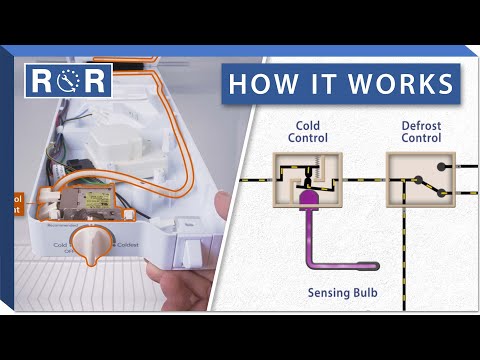
Refrigerator Cold Control Thermostat (How it Works)
Your refrigerator is arguably one of the most critical appliances in your home. It keeps your food fresh, your drinks cold, and prevents spoilage, saving you money and trips to the grocery store. But what's the unsung hero working behind the scenes to maintain that perfect chill? Often, it's the humble yet vital component known as the refrigerator cold control thermostat. If your fridge is acting up – freezing everything or not getting cold enough – understanding how this part works is your first step toward a solution.
What is a Refrigerator Cold Control Thermostat?
At its core, the cold control thermostat is the "brain" that regulates your refrigerator's internal temperature. Think of it as the traffic cop for your cooling system. When you adjust the temperature dial inside your fridge, you're directly interacting with this component. Its primary job is to monitor the internal temperature and, based on your setting, tell the compressor when to turn on (to cool) and when to turn off (to maintain).
Why is the Cold Control Thermostat So Important?
Without a properly functioning cold control thermostat, your refrigerator would either run continuously, turning your produce into ice blocks and wasting energy, or it would fail to run enough, leading to spoiled food and potential health risks. It's crucial for:
- Food Preservation: Maintaining a consistent, safe temperature (typically between 35-38°F or 1.7-3.3°C) prevents bacterial growth and extends the shelf life of your perishables.
- Energy Efficiency: By cycling the compressor on and off as needed, the thermostat prevents unnecessary energy consumption, keeping your utility bills in check.
- Appliance Longevity: Preventing the compressor from running non-stop reduces wear and tear, contributing to the overall lifespan of your refrigerator.
How Does a Refrigerator Cold Control Thermostat Work?
The magic of the cold control thermostat lies in its ingenious, yet simple, electromechanical design. Most residential refrigerator cold controls operate using a sealed capillary tube system, often referred to as a "sensing bulb" or "sensor probe." Here’s a breakdown:
- Sensing Bulb and Capillary Tube: A small metal bulb, filled with a temperature-sensitive liquid or gas, is strategically placed inside the refrigerator compartment where it can accurately read the air temperature. This bulb is connected to the thermostat body by a thin capillary tube.
- Temperature-Sensitive Fluid: As the temperature inside the refrigerator changes, the liquid or gas within the sensing bulb and capillary tube expands when it gets warmer and contracts when it gets colder.
- Bellows/Diaphragm: This expansion and contraction create pressure changes that are transmitted through the capillary tube to a flexible metal bellows or diaphragm located within the thermostat control unit.
- Electrical Contacts: The movement of the bellows or diaphragm is linked to a set of electrical contacts. When the refrigerator temperature rises above your set point, the fluid expands, pushing the bellows, which in turn closes the electrical contacts.
- Compressor Activation: Closing these contacts completes an electrical circuit, sending power to the compressor, which then starts the cooling cycle.
- Compressor Deactivation: As the refrigerator cools down to the desired temperature, the fluid contracts, the bellows retracts, and the electrical contacts open, interrupting the power to the compressor and turning it off. The cycle then repeats as needed to maintain the set temperature.
For a fantastic visual demonstration of these internal components and how they interact to regulate your fridge's temperature, we highly recommend watching this helpful video: Refrigerator Cold Control Thermostat Explained.
Signs Your Cold Control Thermostat Might Be Failing
A faulty cold control thermostat can manifest in several ways, often mimicking other issues. Here are common symptoms to watch for:
- Refrigerator Too Cold (Freezing Food): If your fridge is turning everything into ice, the thermostat might be stuck in the "on" position, constantly signaling the compressor to run.
- Refrigerator Not Cold Enough (Warm Food): Conversely, if your food isn't staying cool, the thermostat might be stuck in the "off" position, preventing the compressor from starting, or it's simply not reading the temperature accurately.
- Compressor Runs Constantly: This indicates the thermostat isn't sensing the correct temperature or isn't breaking the circuit, leading to excessive energy use and potential compressor burnout.
- Compressor Never Runs: If the compressor never kicks on, the thermostat might not be closing the circuit, or it could be completely dead.
- Temperature Fluctuations: Erratic cooling and warming cycles can also point to a struggling thermostat.
Troubleshooting Your Cold Control Thermostat
While testing a cold control thermostat typically involves a multimeter to check for continuity as the temperature changes, this process requires electrical knowledge and safety precautions. You'd usually remove the thermostat, place the sensing bulb in an ice bath, and check the continuity across its terminals to see if it switches on and off correctly. However, for most homeowners, diagnosing and replacing this part is best left to the professionals.
When to Call the Professionals
Attempting to repair or replace a refrigerator cold control thermostat involves working with electrical components and potentially refrigerants (though the thermostat itself doesn't contain them, it's connected to the system). If you're unsure, it's always safer and often more cost-effective in the long run to call a qualified appliance repair technician. They have the right tools, expertise, and safety training to diagnose the issue accurately and perform the repair efficiently, ensuring your refrigerator is back to its optimal cooling performance.
Conclusion
The refrigerator cold control thermostat, though small, plays a monumental role in the functionality and efficiency of your refrigerator. Understanding how it works empowers you to recognize potential problems early. If your fridge isn't maintaining its cool, don't let it spoil your day – or your food! Reach out to experienced appliance repair specialists to get your refrigerator humming happily again, keeping your groceries perfectly chilled.