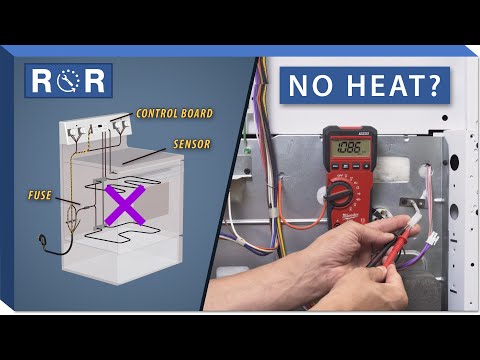
Oven Not Heating? (Quick Testing Guide)
There's nothing quite as frustrating as a hungry family and an oven that refuses to heat up. Whether you're planning a roast, baking cookies, or simply reheating leftovers, a cold oven can throw a wrench into your plans. Don't panic! Many common oven heating issues can be diagnosed, and sometimes even fixed, with a few simple steps. Before you call for professional help, let's walk through our quick testing guide to pinpoint the problem.
Safety First: Always Unplug Your Oven!
Before you touch any internal components or perform any tests, the absolute most critical step is to disconnect power to your oven. Either unplug it from the wall outlet or, if it's hardwired, switch off the corresponding circuit breaker in your home's electrical panel. Safety is paramount!
Common Reasons Your Oven Isn't Heating
When an oven fails to heat, the usual suspects often include:
- A faulty heating element (bake or broil)
- A defective igniter (for gas ovens)
- A malfunctioning temperature sensor
- A tripped circuit breaker or power issue
- A blown thermal fuse
- A problem with the control board
Let's dive into how you can check for these issues.
Is Your Oven Getting Power?
It might sound obvious, but sometimes the simplest solution is overlooked. Check your home's electrical panel for any tripped circuit breakers. If a breaker is tripped, reset it. If your oven is plugged into an outlet, ensure it's fully seated and not loose. You can also try plugging another small appliance into the outlet to confirm it's live.
Electric Oven? Check the Heating Elements
For electric ovens, the most common culprits are the bake and broil heating elements. These are the visible coils inside your oven cavity. When they fail, they often show visible signs:
- Visual Inspection: Open your oven door and look at both the upper (broil) and lower (bake) elements. Do you see any breaks, cracks, bubbles, or burnt spots? A healthy element should be smooth and intact. If you see visible damage, that's likely your problem.
- No Visible Damage? Even if an element looks fine, it could still be faulty. When turned on, a working element should glow red. If an element doesn't glow, it's a strong indicator it needs replacing.
Our helpful video guide demonstrates how to visually inspect an electric bake element for breaks or damage, and how to safely test it with a multimeter if you're comfortable. Replacing a bake element is often a straightforward DIY repair, and we carry a wide range of replacement parts!
Gas Oven? Focus on the Igniter
If you have a gas oven, the igniter is usually the main component responsible for getting the heat going. Here's how to check it:
- Observe the Igniter: With the oven set to bake, carefully observe the igniter (usually a small, glowing rod near the burner tube). It should glow brightly (typically orange-red) within 30-90 seconds. If it glows but the gas doesn't ignite, it might not be getting hot enough to open the gas valve.
- No Glow: If the igniter doesn't glow at all, or glows very faintly, it's likely defective and needs replacement. A faulty igniter is a very common reason for a gas oven not heating.
The referenced video also provides an excellent visual demonstration of a working igniter and how to check its functionality.
Don't Forget the Temperature Sensor
Both electric and gas ovens use a temperature sensor to regulate the heat. This small probe is typically located inside the oven cavity, often on the upper back wall or ceiling. Look for:
- Visible Damage: Is the sensor touching the oven wall? Is it bent or corroded? Any physical damage can affect its ability to read temperature accurately.
- Loose Connection: Ensure it's securely plugged in.
A faulty temperature sensor can cause your oven to overheat, underheat, or not heat at all, as it sends incorrect information to the control board.
The Often-Overlooked Thermal Fuse
A thermal fuse is a safety device designed to blow and cut off power to the oven if it overheats. While less common than element or igniter failures, it's worth considering, especially if your oven suddenly stopped working completely after a prolonged period of use or a self-cleaning cycle. The thermal fuse is usually located behind the oven's back panel or near the control board. Testing it typically requires a multimeter.
When All Else Fails: The Control Board
If you've checked everything else and your oven still isn't heating, the problem might lie with the electronic control board (sometimes called the oven control or clock). This is essentially the "brain" of your oven. Issues with the control board are generally not DIY-friendly and often require professional diagnosis and replacement. Look for any visible signs of burning or damage on the board itself, but this is usually a last resort diagnosis.
Still No Heat? When to Call the Experts
If you've gone through these steps and your oven remains stubbornly cold, or if you're uncomfortable performing any of the tests, it's time to call in a qualified appliance repair technician. Dealing with gas lines or complex electrical components can be dangerous if you're not experienced.
Get Your Oven Parts Here!
We hope this quick testing guide helps you diagnose why your oven isn't heating. Many of these issues, like a faulty bake element or igniter, can be fixed by the average homeowner with the right replacement part. At [Your Company Name], we stock a vast inventory of genuine OEM and high-quality aftermarket parts for all major oven brands. Don't let a cold oven ruin your next meal – find the parts you need to get cooking again today!