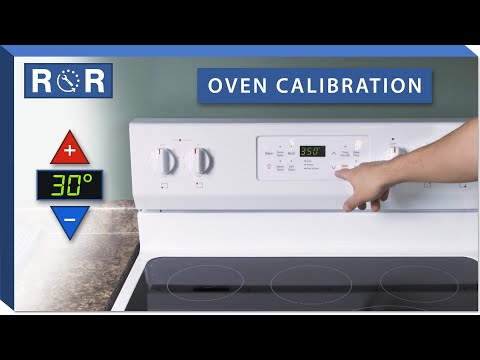
How to Calibrate the Oven Temperature
Is Your Oven Lying to You? How to Calibrate Oven Temperature for Perfect Baking
Ever baked a cake that came out burnt on the outside and raw in the middle? Or perhaps your cookies are always underdone, despite following the recipe to a T? The culprit might not be your baking skills, but your oven's temperature accuracy. An oven that's even a few degrees off can ruin a perfect dish. Fortunately, calibrating your oven is often a straightforward DIY fix. Let's dive into how you can get your oven back in sync and ensure perfectly cooked meals every time.
Why Your Oven Might Be Off
Over time, oven thermostats can drift. This can be due to regular wear and tear, age, or even minor electrical fluctuations. It's a common issue, and it doesn't necessarily mean your oven is broken, just a little out of tune. Temperature discrepancies can lead to uneven cooking, over-browning, or undercooked centers, making precise recipes a gamble.
Signs Your Oven Needs Calibration
How do you know if your oven is telling the truth about its temperature? Look out for these tell-tale signs:
- Inconsistent Cooking: Food consistently burns, undercooks, or cooks unevenly, even when you follow recipes precisely.
- Baking Disasters: Cakes that sink in the middle, bread that doesn't rise, or pastries that don't brown correctly despite proper baking times.
- External Thermometer Discrepancy: This is the most reliable sign. If an independent, accurate oven thermometer consistently shows a different temperature than your oven's display or dial setting, calibration is likely needed.
Tools You'll Need
Before you start, gather these essential items to make the calibration process smooth and efficient:
- An Accurate Oven Thermometer: This is crucial. Do not rely solely on your oven's built-in display; an external thermometer provides an unbiased reading.
- Screwdriver: Often a Phillips head, but check your oven's specific requirements.
- Your Oven's Owner's Manual: This will provide specific instructions for your model, including where the adjustment screw or setting is located and how to access it. If you don't have it, a quick online search for your oven's model number usually works.
Step-by-Step Guide to Calibrating Your Oven Temperature
1. Verify the Discrepancy
First, confirm your oven's temperature inaccuracy:
- Place your oven thermometer in the center of your oven, ensuring it's not touching the racks or walls.
- Preheat your oven to a common temperature, like 350°F (175°C).
- Let the oven preheat for at least 20-30 minutes *after* it signals it's reached temperature. This allows the internal thermostat to stabilize fully.
- Check the reading on your independent oven thermometer. Note the exact difference between its reading and your oven's set temperature. For example, if you set it to 350°F but the thermometer reads 325°F, your oven is running 25°F cold.
2. Locate the Calibration Mechanism
This step varies significantly by oven model:
- Consult Your Owner's Manual: This is your best friend here. It will detail how to access your oven's calibration settings, whether it's a physical screw or a digital menu option.
- Behind the Temperature Knob: For many older or mechanical ovens, the calibration screw is located directly behind the temperature control knob. You might need to gently pull the knob straight off to reveal it.
- Digital Controls: Newer ovens with digital controls often have a calibration setting accessible through the control panel menu. Look for options like "Calibration," "Temp Offset," or "Temperature Adjustment" in your settings.
Need a visual guide for locating the adjustment screw on a common type of oven? This step can be tricky depending on your model. For a helpful demonstration of removing the knob and identifying the screw, check out this video: How to Adjust Your Oven Temperature. It provides a clear visual on how to proceed with mechanical oven adjustments.
3. Make the Adjustment
- Mechanical Ovens (Knob with Screw): The calibration screw usually has a small slot. Turning it in one direction increases the temperature, and turning it the other decreases it. Many ovens adjust by approximately 10-25°F per full turn. Your manual should specify this. If your oven was 25°F cold (reading 325°F when set to 350°F), you'll need to increase the temperature. Turn the screw slightly, perhaps a quarter or half turn, in the direction indicated by your manual for increasing temperature.
- Digital Ovens: Follow the on-screen prompts to adjust the temperature offset. You'll typically input the exact number of degrees you want to add or subtract from the current reading.
4. Re-test and Refine
Patience is key here:
- Repeat Step 1. Preheat your oven to 350°F (or your preferred test temperature) with the thermometer inside.
- After allowing it to stabilize for 20-30 minutes, check the thermometer reading.
- If it's still off, make further small adjustments (e.g., another quarter turn on the screw or adjust the digital offset again) and re-test. It might take a few tries to get it perfect. Aim to get the external thermometer reading as close as possible to your oven's set temperature.
When to Call a Professional
While oven calibration is often a DIY task, some issues require expert attention. If, after multiple careful attempts, your oven temperature remains wildly inaccurate, or if you encounter other issues like:
- The oven not heating at all.
- The oven overheating drastically (e.g., set to 350°F but reaching 500°F).
- Error codes appearing on digital displays.
- Strange smells (like burning plastic or electrical) or unusual sounds.
...it's time to call in the experts. There might be a faulty thermostat, igniter, heating element, or control board that requires professional diagnosis and repair. Our certified technicians are ready to help get your oven back to perfect working order, ensuring safety and optimal performance.
Conclusion
A properly calibrated oven is the secret ingredient to consistent culinary success. By taking a few simple steps, you can ensure your recipes turn out perfectly every time, saving you from baking frustrations and wasted ingredients. Regular checks with an accurate oven thermometer can help you catch discrepancies early, keeping your kitchen running smoothly for years of delicious meals. Happy baking!