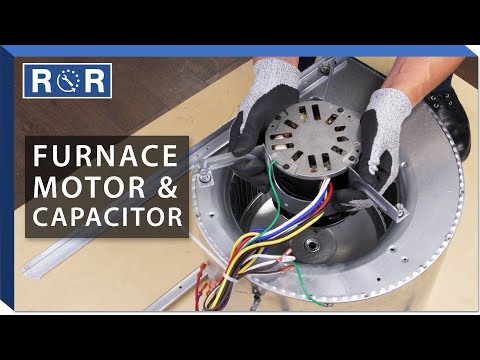
Furnace Motor & Capacitor
The Heart and Spark of Your Heating System: Troubleshooting the Furnace Motor and Capacitor
When the winter chill sets in, your home relies on a properly functioning furnace to keep your living space warm and comfortable. At the center of this heating process is a dynamic duo: the furnace blower motor and its companion, the run capacitor. If your furnace suddenly stops blowing warm air, makes strange noises, or refuses to turn on at all, there is a very high probability that one of these two components is at fault.
Understanding how the furnace motor and capacitor work together, how to spot the signs of failure, and how to safely troubleshoot them can save you hundreds of dollars in professional repair fees. In this guide, we will break down everything you need to know to diagnose and resolve issues with your furnace’s blower motor and capacitor.
How the Furnace Blower Motor and Capacitor Work Together
To understand why your furnace is acting up, it helps to know what these parts actually do. The blower motor is the powerhouse of your HVAC system. Its job is to spin the fan cage (also known as a squirrel cage) to force heated air through your home’s ductwork. However, electric motors require a massive surge of electrical energy to break their stationary inertia and start spinning.
This is where the capacitor comes in. Think of the capacitor as a temporary storage battery. It stores electrical energy and releases it in a concentrated burst to give the blower motor the "kickstart" it needs to spin up to speed. Once the motor is running, the capacitor continues to provide a steady phase-shifted electrical current to keep the motor running efficiently. If the capacitor fails, the blower motor will not have the power to start, even if the motor itself is in perfect condition.
Signs Your Furnace Capacitor or Blower Motor is Failing
When either the motor or the capacitor begins to degrade, your heating system will usually give you a few warning signs. Recognizing these symptoms early can prevent further damage to your furnace.
- The Hum of Death: If you hear a low humming sound coming from your furnace cabinet, but the fan isn’t spinning, this is a classic sign of a failed capacitor. The motor is receiving call-for-heat voltage, but it lacks the necessary torque to start turning.
- Weak Airflow: If you feel only a gentle draft of warm air coming from your vents instead of a strong breeze, your blower motor may be failing, or the capacitor may be failing to keep the motor running at its designated speed.
- Intermittent Shutoffs: A failing motor will draw too much electrical current, causing it to overheat. Most modern motors have an internal thermal overload switch that shuts the motor down to prevent a fire. If your furnace runs for a few minutes and then shuts off abruptly, overheating is a likely culprit.
- The "Clicking" Cycle: If you hear your furnace control board click, followed by a hum, and then another click as it shuts down without the fan starting, the system is failing its startup cycle due to a bad capacitor or seized motor bearings.
How to Diagnose a Bad Capacitor vs. a Dead Motor
Before ordering replacement parts, you need to determine which of the two components has failed. Fortunately, diagnosing these parts is relatively straightforward if you have a digital multimeter that can measure capacitance (microfarads, indicated by the symbol µF or MFD).
First, inspect the capacitor physically. A healthy capacitor has flat, straight sides and a flat top. If the capacitor is bulging, swollen, or leaking oil, it has failed internally and must be replaced immediately. If it looks normal, you can test it with your multimeter. Set your meter to the capacitance setting, place the leads on the capacitor terminals, and compare the reading to the rating printed on the side of the capacitor (e.g., 5 µF, 10 µF). If the reading is more than 10% below the rated value, the capacitor is bad.
To test the motor, try spinning the fan shaft by hand (with the power completely off!). If the shaft spins freely and smoothly, the motor bearings are likely fine, pointing the finger back at a weak capacitor. If the shaft is stiff, seized, or makes a grinding sound when spun, the motor bearings have failed, and the entire blower motor must be replaced.
Step-by-Step Replacement: Learning from the Experts
Replacing a furnace blower motor and capacitor is a highly manageable DIY project that can be completed with basic hand tools. To help you visualize the entire process, we highly recommend watching this comprehensive, step-by-step video guide: How to Replace a Furnace Blower Motor and Capacitor.
In the video, you will see exactly how to safely slide out the blower deck assembly, disconnect the wiring harness from the control board, and swap out both the motor and the capacitor. Here is a brief overview of the steps demonstrated in the video:
- Disconnect the Power: Turn off the electrical breaker to the furnace and flip the local service switch on the side of the furnace cabinet to "Off".
- Access the Blower Assembly: Remove the lower access panel of your furnace. This may require removing a few hex-head screws.
- Discharge the Capacitor: Even with the power off, a capacitor can store a lethal electrical charge. Use an insulated screwdriver to bridge the terminals of the capacitor to safely discharge any stored energy.
- Disconnect and Remove: Label and disconnect the wires running from the motor to the control board. Remove the mounting bolts holding the blower housing in place and slide the entire assembly out of the furnace.
- Swap the Parts: Loosen the set screw on the blower wheel hub, remove the motor mounting brackets, and slide the old motor out. Install the new motor, align the blower wheel, and secure the new capacitor in its mounting strap.
- Reinstall and Test: Slide the blower housing back into the furnace, reconnect the wiring harness according to your diagram, restore power, and test the system for quiet, efficient operation.
Safety Guidelines for DIY HVAC Repairs
Working on your furnace involves dealing with high-voltage electricity and moving parts. Safety should always be your absolute highest priority. Never skip the step of verifying that the power is off using a non-contact voltage tester before touching any internal components. Always discharge the capacitor before handling its terminals, as it can deliver a painful or dangerous shock even if the furnace has been unplugged for days.
Additionally, when replacing a blower motor, always install a brand-new capacitor at the same time. Capacitors are inexpensive, and a worn-out capacitor will quickly damage a brand-new blower motor by causing it to run hot or struggle during startup. Think of them as a matched set!
By taking the time to diagnose these parts correctly and following professional repair steps, you can keep your home warm all winter long while keeping your repair budget firmly in check.