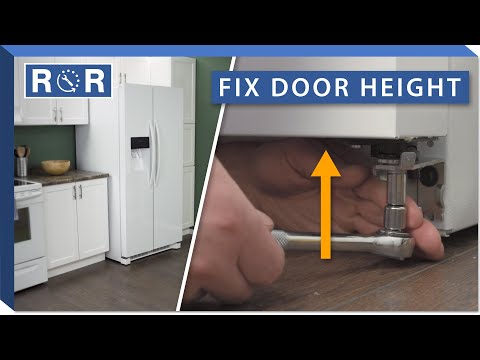
Refrigerator Door Height Adjustments
Is Your Refrigerator Door Sagging? How to Master Refrigerator Door Height Adjustments
There's nothing quite as frustrating as a refrigerator door that just won't behave. Whether it's stubbornly refusing to close, scraping against the floor, or simply looking lopsided compared to its counterpart, an uneven refrigerator door isn't just an aesthetic annoyance. It can lead to energy waste, compromised food preservation, and even premature wear on your appliance. The good news? Often, the fix is simpler than you think: a quick door height adjustment!
Why Your Refrigerator Door Might Need Adjusting
Before you grab your tools, it helps to understand why your fridge door might be out of whack in the first place. Here are some common culprits:
- New Installation Settling: Even after initial setup, your refrigerator can settle slightly over time, causing minor shifts.
- Uneven Flooring: A slight dip or rise in your kitchen floor can throw off the entire appliance's balance, impacting door alignment.
- Heavy Door Contents: Regularly overloading door shelves with heavy bottles or containers can put stress on hinges and cause gradual sagging.
- Worn Hinge Bushings: Over years of use, the small plastic or metal bushings within the door hinges can wear down, leading to play and misalignment.
- Accidental Impact: A bump or forceful opening/closing can sometimes knock a door out of alignment.
Tools You'll Need for the Job
Most refrigerator door height adjustments require only a few basic tools:
- Wrench: Typically a 1/4" or 5/16" (or metric equivalent) for leveling legs and sometimes hinge bolts. Some models might need a larger size.
- Level: A spirit level is essential for accurately assessing your refrigerator's balance and door alignment.
- Screwdriver: Phillips or flathead, depending on your hinge or adjustment mechanism.
- Flashlight: To help you see into those dark, recessed areas around the leveling legs and bottom hinges.
- Helper (Optional but Recommended): For larger or heavier doors, an extra set of hands can make the process much safer and easier.
- Shims (Optional): If your floor is significantly uneven, small wooden or plastic shims can be useful.
Step-by-Step Guide: Adjusting Your Refrigerator Door Height
Ready to tackle that sag? Follow these steps to get your refrigerator doors perfectly aligned once again.
Step 1: Safety First!
Always begin by unplugging your refrigerator from the wall outlet. This prevents accidental power surges or injuries while you're working around the appliance.
Step 2: Assess the Situation with a Level
Before touching any screws or bolts, use your level to determine exactly what's off. First, place the level on top of the refrigerator from front to back and then side to side. Is the entire appliance level? Next, place the level along the top edge of each door, and then along the side where they meet (for French door or side-by-side models). This will tell you if the entire fridge is uneven, or if it's just a specific door.
Step 3: Level the Entire Refrigerator (Crucial First Step!)
Often, an uneven door is a symptom of an uneven refrigerator. Most refrigerators have adjustable leveling legs or rollers at the front, and sometimes fixed rollers at the back. To adjust them:
- Gently pull the refrigerator away from the wall enough to access the front legs/rollers.
- Locate the leveling legs, usually found under the front corners. They might be hidden behind a kick plate that you'll need to remove first (often just pulls off or has a couple of screws).
- Using your wrench, turn the leveling legs clockwise to raise that corner of the refrigerator or counter-clockwise to lower it.
- Work slowly, adjusting one side at a time, and frequently check the level on top of the appliance. You want the fridge to be perfectly level from side to side, and slightly higher in the front than the back (a slight tilt backward helps the doors close automatically).
- Pro Tip: For a clear visual guide on leveling your refrigerator's front legs, check out this helpful video: Refrigerator Door Height Adjustment & Leveling Legs. The video demonstrates how to use your wrench to raise or lower the front of the appliance.
- If your floor is very uneven in the back, you might need to use shims under the rear rollers, as also shown in the referenced video.
Once the entire refrigerator is level (or slightly tilted back), re-check your door alignment. Many times, this step alone will fix the problem!
Step 4: Fine-Tuning Door Height (If Still Needed)
If leveling the entire refrigerator didn't quite get the doors perfectly aligned, some models offer specific door height adjustment mechanisms. This is most common on French door and side-by-side refrigerators.
- Locate the Adjustment Screw/Cam: On many French door models, there's a specific adjustment screw or cam on the bottom hinge of each door. This mechanism allows you to raise or lower the individual door.
- Referencing the Video: The same video linked above (Refrigerator Door Height Adjustment & Leveling Legs) also clearly illustrates how to locate and use this type of adjustment screw on a French door refrigerator. You'll typically use a wrench to turn this screw, raising or lowering the door as needed.
- Adjust Slowly: Make small turns (e.g., a quarter turn), then open and close the door a few times to let it settle, and check your alignment. Repeat until the doors are even.
- Top/Bottom Freezer Models: These models often rely more heavily on the overall refrigerator leveling. If a door is still sagging after leveling the appliance, you might need to insert thin shims under the bottom hinge (between the hinge and the refrigerator frame) to raise it. This is a more advanced technique and requires careful disassembly of the hinge.
Step 5: Test and Re-Test
Once you think you've got it right, plug your refrigerator back in. Open and close both doors several times. Do they swing freely? Do they close completely and seal tightly? Run your hand along the seam where the doors meet to feel for any unevenness. Place your level on the top edges of the doors again. Fine-tune as necessary until everything looks and feels right.
When to Call a Professional
While many door height adjustments are DIY-friendly, there are times when it's best to call in the experts:
- If you've tried all the adjustments and your doors are still misaligned.
- If you notice visible damage to the hinges themselves (cracked metal, broken pins).
- If you suspect internal damage to the refrigerator's frame.
- If you're uncomfortable performing any of these steps yourself.
A professional appliance technician can quickly diagnose complex issues and ensure your refrigerator is functioning perfectly, extending its lifespan and keeping your food fresh.