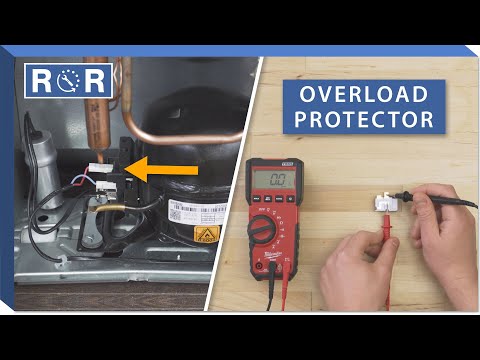
How to Test & Replace an Overload Protector in a Refrigerator
Is Your Refrigerator Not Cooling? How to Test & Replace the Overload Protector
There's nothing more frustrating than opening your refrigerator only to find it's not cooling properly. Before you panic and call an expensive repair technician, consider a common culprit: the refrigerator overload protector. This small but vital safety device can often be diagnosed and replaced with a few basic tools and a bit of DIY spirit. In this guide, we'll walk you through the symptoms of a faulty overload protector, how to test it, and how to replace it, saving you time and money.
What is a Refrigerator Overload Protector?
The overload protector (sometimes called a thermal overload) is a safety mechanism designed to protect your refrigerator's compressor from overheating or drawing too much electrical current. Think of it like a miniature circuit breaker for your compressor. If the compressor gets too hot or struggles to start, the overload protector will temporarily cut power to prevent damage. This is a good thing, but if it's faulty, it can prevent your fridge from running at all.
Symptoms of a Faulty Overload Protector
How do you know if your overload protector might be the problem? Look out for these common signs:
- Compressor Clicking On and Off Rapidly: You might hear a distinct "click" sound from the back of the fridge every few minutes, but the compressor never actually starts running consistently.
- Refrigerator Not Cooling: The most obvious symptom. The fridge feels warm inside, and food is spoiling.
- Compressor is Hot to the Touch: If the overload protector is failing to reset, the compressor might be trying to start repeatedly and getting excessively hot.
- Refrigerator Not Running, But Lights Work: If the interior lights come on but you hear no compressor hum and feel no cooling, the overload protector could be preventing the compressor from starting.
Safety First!
Before you begin any appliance repair, safety is paramount. Always UNPLUG YOUR REFRIGERATOR from the wall outlet. Failure to do so can result in serious electrical shock. It's also a good idea to wear work gloves to protect your hands.
Tools You'll Need
Gather these items before you start:
- Multimeter (with continuity or Ohm setting)
- Screwdriver (Phillips and/or flathead, depending on your fridge model)
- Needle-nose pliers (optional, for stubborn wires)
- New refrigerator overload protector (ensure it's the correct part for your model!)
Locating the Overload Protector
The overload protector is typically found on the back of your refrigerator, near the bottom. It's usually attached directly to the side of the compressor. You may need to remove a metal or cardboard access panel to get to it. This panel is usually held in place by a few screws.
How to Test Your Refrigerator Overload Protector (Step-by-Step)
Once you've located the compressor and the attached components, follow these steps:
- Disconnect Wires: Carefully pull off the wires connected to the overload protector. Take a photo first if you're unsure how they go back on.
- Remove the Overload Protector: The overload protector usually slides or clips directly onto the compressor's electrical terminals. Gently wiggle and pull it off. Be careful not to bend the compressor terminals.
- Set Your Multimeter: Turn your multimeter to the continuity setting (often indicated by a speaker icon) or the lowest Ohm (Ω) setting.
- Test for Continuity: Place one probe of your multimeter on each of the two terminals of the overload protector.
- Interpret the Results:
- Good Overload Protector: Your multimeter should show a reading of very low resistance (typically between 0 and 1 Ohm) or, if using the continuity setting, it should beep. This indicates a closed circuit, meaning power can flow through.
- Bad Overload Protector: If your multimeter shows "OL" (over limit), infinite resistance, or doesn't beep on the continuity setting, the overload protector is faulty and has an open circuit. It needs to be replaced.
For a clear visual demonstration of locating, removing, and testing the overload protector, we highly recommend watching this helpful video: Refrigerator Overload Protector Test & Replacement. It provides excellent guidance throughout the process.
How to Replace Your Refrigerator Overload Protector (Step-by-Step)
If your test confirms the overload protector is faulty, replacing it is straightforward:
- Acquire the Correct Part: Before ordering, write down your refrigerator's make, model number, and the part number of the old overload protector. Ensure the new part is an exact match for safe and proper operation.
- Install the New Protector: Carefully slide the new overload protector onto the compressor terminals. It should fit snugly.
- Reconnect Wires: Attach the wires to the new overload protector exactly as they were on the old one. Refer to your photo if needed.
- Replace Access Panel: Screw the access panel back onto the refrigerator.
Testing the Repair
Once everything is reassembled, plug your refrigerator back into the wall outlet. Listen for the compressor to start humming. It might take a few minutes. Check inside the freezer and fresh food compartments after a few hours to ensure they are cooling down. If the fridge starts cooling normally, congratulations, you've successfully replaced your overload protector!
When to Call a Professional
While testing and replacing an overload protector is a common DIY fix, there are times when it's best to call a professional:
- If you are uncomfortable at any point with the electrical components.
- If the overload protector tests fine, but your refrigerator is still not cooling. This could indicate a more serious issue like a faulty compressor, a sealed system leak, or a problem with the start relay.
- If you've replaced the overload protector, but the problem persists.
Get Your Fridge Running Again!
Diagnosing and replacing a faulty refrigerator overload protector is a rewarding DIY task that can save you money and extend the life of your appliance. With the right tools and a little confidence, you can get your fridge cooling efficiently once more. If you need a replacement overload protector or any other appliance part, be sure to check out our extensive selection of genuine parts designed for a perfect fit.